Wednesday, March 25, 2015

Sculpture Magazine now in Library! Whoohoo!!


Just letting you know that the library has received its first issue of Sculpture - it is located along the west wall with our other serials as they walk into the library. 


This is an uber-cool magazine - If you get time - check it out!! Articles vacillate - may provide good ideas for future projects!!

M.

Wednesday, March 18, 2015

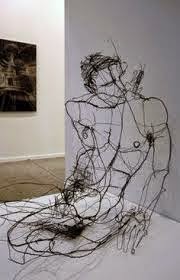
Wire Assignment - Overview and Date due Changed to Critique on Thursday, March 26

Project  Lines: Drawing in Three Dimensions


Definition: A point is a non-dimensional figure. It has no length, width, or depth. It occupies no space. If we imagine a point, however, moving through space in time, leaving a path behind it, that path describes a line, a one-dimensional figure having length but no height or depth.

Assignment:

To create a drawing with wire – person, animal or domestic object. 
Try to select a form that is interesting in a variety of directions. Do 6 sketches of the object(s.) Start with the contours and continue by filling in the voids. Keep in mind this must all be done with considerate line-work in order for the drawing to translate into a 3D object. Using medium weight wire, create a sculpture of your selected object. Think of the wire as a way of drawing in space. Most of us have more experience with working in 2 dimensional media rather than with creating works in the round. As you work, train yourself to see things in 3 dimensions, to understand the lines, shapes, and forms in space that make up this subject. Your sketches should bridge the gap between the original object and the completed wire construction. One freestanding piece will be due for critique.

-3 sketches due at Critique : Thursday, March 26th

Materials:

- Soft black annealed steel wire.  This wire is at the Bookstore for purchase of only $1.99/coil. 

The thickness of wire is referred to as its gauge: the higher the number, the thinner the wire. I suggest 18-gauge wire, thicker will be too difficult to manipulate and thinner will not be strong enough to stand, however you can use a 20 or 22 gauge for connections.

- Tools: Needle nosed pliers with built-in cutters, safety glasses and Sketchbook


Saturday, March 14, 2015

Interesting Artist of the Day - Tanya Schultz and Twalst

With an overpoweringly colorful and sweet visual style, Australian artist Tanya Schultz creates dazzling works of candy floor art that will make you feel like you just visited Candyland and ate the whole place down to the ground.

Her art doesn’t just look sweet – it is sweet. Tanya (who started creating these works together with artist Nicole Andrijevic as Pip & Pop before they parted ways) uses candy, sugar, beads, toys and other hyper-colorful materials to create these works of art.


Um...I bet her dentist doesn't like her.....:)


Artist: TWALST

In an unexpected but effective mix of unlikely media, artist Talwst has created a series of miniature dioramas inside of antique ring boxes that capture wide array of scenes from various historical periods.
According to the artist, the idea for this series of miniature dioramas came about when a street vendor in Paris handed him an antique ring box and told him “I want to see what you make with this.” Talwst created a scene of a figure emerging from the sea and has been creating tiny scenes ever since.
The antique nature of the ring boxes he uses, as well as subtle details used in his tiny dioramas, help drive home his focus on history; “I want the viewer to open the box and feel they have been transported to another world,


Wednesday, March 11, 2015

Kinetic Assignment DUE: Tuesday, March 17


Background:  Kinetics: (Ancient Greek: κίνησις “kinesis”, movement or to move) the study of motion and its causes  Kinetics in Sculptures include moving parts. Artist Marcel Duchamp’s 1913 Bicycle Wheel is generally considered the first such work. Although they were made throughout the 20th century—by artists associated art movements of Constructivism and the Bauhaus—and continue to be made today, kinetic sculptures’ heyday was during the 1950s and 1960s, when Alexander Caulder and Jean Tinguely were the best-known practitioners. Calder became famous for his mobiles and Tinguely for his 1960 Homage to New York, a kind of junk machine that destroyed itself in the sculpture garden of the Museum of Modern Art.

This next assignment explores Kinetics in art.  You will develop a piece of art that contains a Kinetic component to it! 

Kinetics explore movement but utilization of another direct force to create the work.  That is your focus on this work.  If it is wind, research wind turbines, airplanes, and most importantly artists that do kinetics already with air related objects.  Be informed before you start.  This will guarantee your success on this project.

Required Research:


 Anthony Howe: this is very cool....


Musical Harp


PS.

I spoke to many about this project - If anyone wants to brainstorm ideas or have a question, etc., please do not hesitate to email me.  Yah

Friday, March 6, 2015

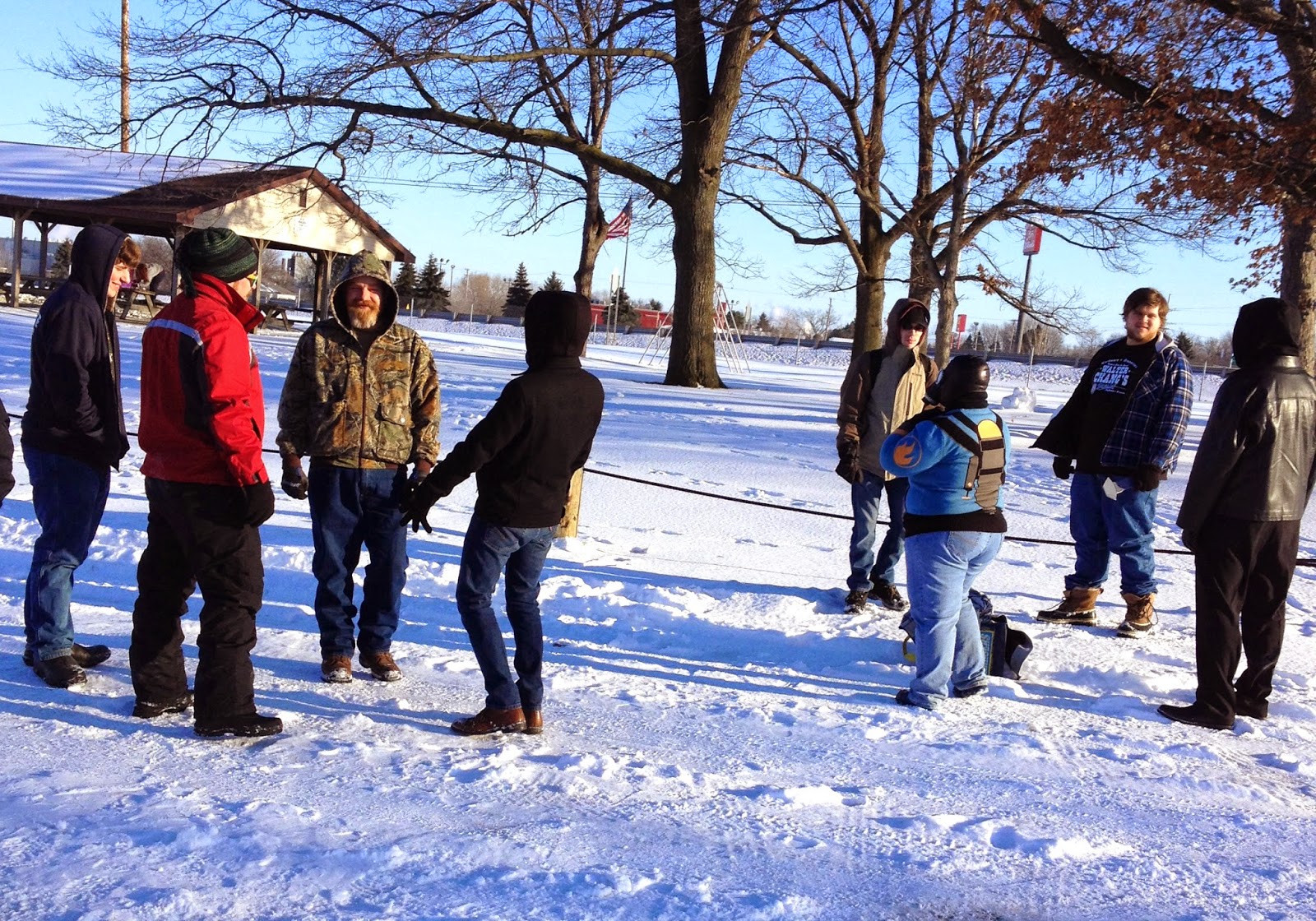
Some Sculpture Sledders

Ok it was cold right.  Y'all did awesome!  Please send me your photos - my iphone died in the cold right at the beginning!!

Coldness and Awesome Participants...


Group discussing strategy; Kaylee looking onwards towards the hill


Brittany, Carrie and Haley surmising if the hill will in fact, cause a near-death experience..


Chariots..

Mike and Ryan wondering if it really can fly into space ...